Bird Feeders
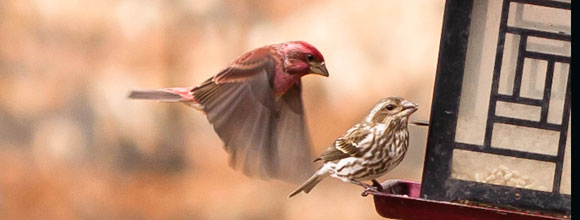
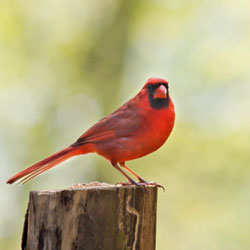 Some bird, mainly sparrows, prefer to feed on the ground. However, most birds enjoy eating at an elevated feeder. Feeders also provide a safer place for birds to eat at a safe distance from predators, such as cats.
Feeder Types
Platform Feeders: These are simple, platforms with raised sides to hold in the bird food. Some have mesh bottoms, or some other form of drainage, so the food doesn't get soggy. A canopy over the platform will also help to keep the food dry. Platforms are good choices for feeding larger birds and for attracting flocks.
Hopper Feeders: This common form of feeder can be used for just about any type of seed. Hopper feeders can be hung or mounted on a pole. Some models have an even flow seed distributor that rations the seeds.
Tube Feeders: Tube feeders can be either hung or pole mounted. Some have a tray to catch spilled seeds. Tube feeders are best for feeding small birds that can easily perch at the feeding holes. Some tube feeders are specifically designed to dispense thistle seed for finches.
Suet Feeders: Most suet feeders are mesh or wire cages that hold suet cakes and balls. Suet can also be hung in simple mesh bags, but these don't hold up well to squirrels and racoons.
Tips for Bird Feeder Selection
 Look for feeders with drainage holes in the bottoms of the feeder hopper and the seed try. This allows rainwater to drain and helps keep seed from spoiling.
Look for feeders with shallow plate-like seed trays that will catch seed and allow empty seed shells to blow away. Deep accumulations of seed and bird droppings can create a situation that is unhealthy for your visiting birds.
Choose tube feeders with metal ports to keep squirrels from chewing open the holes.
Ceramic and metal feeders are less apt to be destroyed by squirrels.
Seed trays allow larger birds to use tube feeders. If you want to discourage larger birds, use a feeder without a tray.
Portortornec condimenterdum eget consectetuer condis consequam pretium pellus sed mauris enim. Puruselit mauris nulla hendimentesque elit semper nam a sapien urna sempus.
Portortornec condimenterdum eget consectetuer condis consequam pretium pellus sed mauris enim. Puruselit mauris nulla hendimentesque elit semper nam a sapien urna sempus.
Portortornec condimenterdum eget consectetuer condis consequam pretium pellus sed mauris enim. Puruselit mauris nulla hendimentesque elit semper nam a sapien urna sempus.
Portortornec condimenterdum eget consectetuer condis consequam pretium pellus sed mauris enim. Puruselit mauris nulla hendimentesque elit semper nam a sapien urna sempus.